
ImagenAI
16:9 panorámico
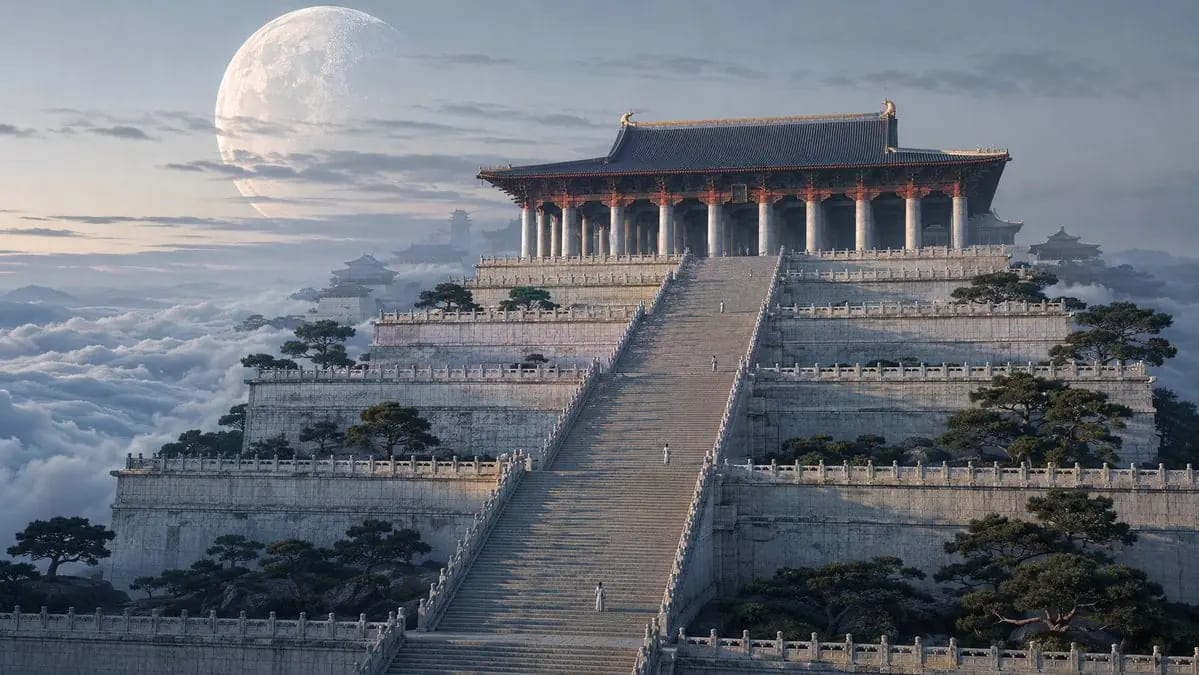
16:9 widescreen. High-end cinematic 3D render with feature-animation polish, extreme architectural detail, no plastic sheen. Cool early dawn. [SCALE RULE — the whole point] The architecture is the subject. Each human figure stands no...
Prompt
16:9 panorámico. Render 3D cinematográfico de alta gama con acabado de animación de características, detalle arquitectónico extremo, sin brillo plástico. Amanecer frío temprano.

[SCALE RULE — el punto central] La arquitectura es el sujeto. Cada figura humana no mide más que un poste de balaustrada a su lado, aproximadamente una cuadragésima parte de la altura del salón detrás de ellas, y ocupa alrededor del 3% de la altura del encuadre — unas pocas docenas de píxeles de alto. Un espectador debe escanear la imagen un momento antes de notar que hay alguien allí. Nunca agrandarlas para legibilidad.

[VANTAGE] Cámara colocada muy atrás y ligeramente elevada, una lectura de teleobjetivo a 29 grados (75 mm) que comprime los niveles en planos apilados.

[THE ARCHITECTURE] Un colosal salón ceremonial corona el centro superior del encuadre, asentado sobre nueve niveles escalonados de plataforma de jade blanco. Su cumbrera se eleva doscientos metros sobre la base. Al frente recorre una columnata de columnas monolíticas de piedra marfil, cada una de más de tres metros de grosor y decenas de metros de altura, que sostienen ménsulas de madera lacada al óleo en bermellón oscuro y aleros de tejas gris azul profundo. Abajo, una sola escalinata de más de trescientos peldaños desciende hacia la cámara, flanqueada todo el camino por balaustradas bajas talladas con postes a intervalos regulares. La forma sigue el canon oficial de la construcción Tang-Song escalado rigurosamente — simétrico, estructuralmente sólido, contenido, sin ornamentación fantástica.

[THE FIGURES] Cuatro personas están distribuidas a lo largo de la escalinata a alturas muy separadas, cada una sola, cada una vista desde atrás como una marca vertical pálida en túnicas blancas y celadón. La más cercana está en el tercio inferior; la más lejano es apenas una mota de luz cerca de la columnata. Su escala frente a la escalera y las columnas es la única información que la imagen da sobre cuán grande es todo esto. Sin grupo, sin multitud, sin gesto.

[SURROUNDINGS] Los bordes de la plataforma se desvanecen en un mar de nubes continuo que rueda lentamente a ambos lados y detrás, su superficie superior atrapando la primera luz. Pinos retorcidos verde oscuro se aferran a los bordes de la terraza a intervalos, pequeños frente a la piedra. Salones secundarios distantes y una torre de puerta lejana se alejan a lo largo del mismo eje, disolviéndose en la neblina.

[SKY] Azul grisáceo pálido que se aclara a marfil frío cerca del horizonte. Una luna muy grande y pálida se posa baja detrás del salón, su diámetro aproximadamente un tercio de la altura del encuadre, con cráteres visibles, integrada en el aire — nubes delgadas cruzándola, un resplandor suave en su limbo, su borde inferior suavizado por la neblina.

[LIGHT] Luz fría de amanecer bajo desde detrás de la cámara izquierda, que barre la escalera, arrojando sombras largas y nítidas por los peldaños desde cada poste de balaustrada — esas sombras repetidas son el segundo dispositivo de escala y deben leerse claramente. Las cumbreras y las puntas de las columnas atrapan un fino borde dorado cálido; las masas permanecen en luz difusa azul grisácea fría. Sin rayos divinos, sin destellos.

[ATMOSPHERE] Neblina al 40%, construyéndose capa por capa con la distancia, de modo que la escalera cercana se lee nítida, la columnata más suave, la torre de la puerta lejana casi disuelta. Ocho o más capas de profundidad.

[COLOR] Piedra desgastada blanca marfil, laca mate bermellón oscuro, teja gris azul profundo, pino verde oscuro, cielo pálido frío. Dorado cálido solo como un borde fino en cumbreras y puntas de columnas, menos del 5% del encuadre. Limpio y frío, nunca turbio, nunca naranja.

[RENDER] Materiales físicamente reales — desgaste moteado en la piedra, finos cuarteados en la laca, tejas individuales legibles en los aleros cercanos. Curva de bajo contraste, sombras elevadas conservando textura, realces suavizados. Ambiente: monumental, silencioso, humillante.

[AVOID] Figuras renderizadas más grandes que un poste de balaustrada, figuras cerca de la cámara, multitudes, rostros, pájaros o grullas, tono dorado anaranjado, superficies plásticas, neblina atmosférica tan densa que la arquitectura pierde detalle, encuadre simétrico centrado sin señales de profundidad.
Cómo usar este prompt
- 1Copia el prompt exactamente y pégalo en tu modelo preferido o en un proyecto de Ideart.
- 2Sustituye detalles de producto, sujeto, audiencia y estilo por tu propio contexto.
- 3Genera primero un resultado base y luego remezcla la dirección más fuerte en una campaña, serie de imágenes o concepto de vídeo.
Explorar rutas de prompts cercanas
Modelo
Construir desde este prompt
Convierte un prompt de imagen en un proyecto creativo terminado.
Guarda el prompt, añade imágenes de referencia o notas y deja que Ideart dé forma al siguiente paso de producción desde el mismo hilo creativo.