
이미지GPT Image 2
Character Consistency Reference Chart
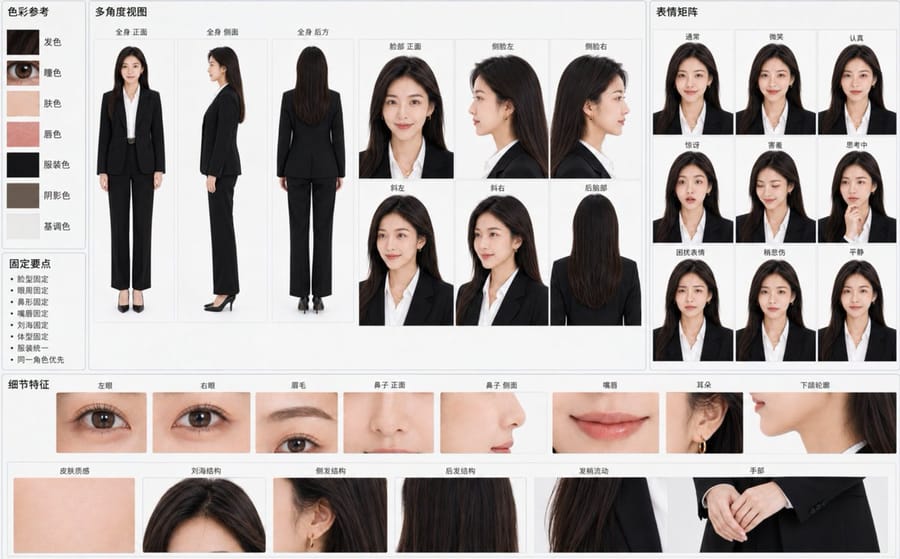
A technical prompt for creating a visual reference board to lock character identity across multiple angles, expressions, and details.
프롬프트
Create a "{argument name="chart title" default="Character Identity Consistency Reference Chart"}" based on the attached original character image, horizontal {argument name="ratio" default="16:10"}, {argument name="background color" default="light gray-white background"}, professional visual data board layout. The primary goal is to make all panels clearly recognizable as the exact same character at a glance, rather than multiple similar individuals.

Treat the character's identity in the reference image as an unchangeable hard constraint. Strictly lock:

- Face width-to-height ratio, cheekbones, cheeks, jawline, and chin
- Eye contours, distance between eyes, eyelid structure, and gaze temperament
- Eyebrow arch, thickness, color, and eyebrow-to-eye distance
- Bridge of the nose, tip, nostrils, and side profile nose shape
- Upper/lower lip thickness, lip peak, corners, and natural lip color
- Skin tone, pores, flush, and natural skin texture
- Hairline, parting, bangs, side hair, back hair length, and hair strand flow
- Age impression, skeletal frame, shoulder width, limb length, and overall body type
- Original clothing, original art style, light texture, and overall atmosphere

Use large panels in the center to display:

- Full body front
- Full body side
- Full body back
- Face front
- Left profile
- Right profile
- Three-quarter left
- Three-quarter right
- Back of the head

Maintain perfectly consistent skull structure, relative position of facial features, hair volume, and body proportions for every angle. The profile must accurately continue the bridge of the nose, lips, chin, and forehead structure from the front; generating different character-style profiles is prohibited.

Configure a small expression matrix on the right:

- Normal
- Smile
- Serious
- Surprised
- Shy
- Thinking
- Troubled
- Slightly sad
- Calm

Maintain the same pupils, base eye size, nose shape, lip shape, and face shape. Smiles should be natural and restrained, not changing the character's age or temperament.

Configure fine identity anchors at the bottom:

- Left eye / Right eye / Eyebrows
- Nose (front/side) / Lips / Ears
- Jawline contour / Skin texture
- Bangs / side hair / back hair structure / Hair end flow
- Hands

Add 5-7 accurate color samples on the left: hair, eyes, skin, lips, clothing, shadow, and tone color. Add minimalist "Fix Points": face shape fixed, eye area fixed, nose shape fixed, lips fixed, bangs fixed, body type fixed, clothing unified, same character priority.

Background clean, soft uniform lighting, no cinematic lighting, strong depth of field, or decorative elements. Realistic characters retain natural pores, fine hair, and slight skin tone variations; non-realistic characters strictly maintain the original image's lines, color blocks, shadows, and materials without unauthorized style conversion.

All labels use clear simplified Chinese, moderate font size, not overlapping characters. If space is insufficient, prioritize identity anchors and main angles, reduce duplicate panels, and do not force a full layout by shrinking text or sacrificing character consistency.이 프롬프트 사용 방법
- 1프롬프트를 그대로 복사한 뒤 원하는 모델이나 Ideart 프로젝트에 붙여넣으세요.
- 2제품, 주제, 대상, 스타일 세부사항을 자신의 컨텍스트로 교체하세요.
- 3먼저 기준 결과를 생성한 뒤 가장 강한 방향을 캠페인, 이미지 세트 또는 비디오 콘셉트로 리믹스하세요.
이 프롬프트로 제작
이미지 프롬프트를 완성된 크리에이티브 프로젝트로 바꾸세요.
프롬프트를 저장하고 참조 이미지나 노트를 추가한 뒤 Ideart가 같은 창작 스레드에서 다음 제작 단계를 만들게 하세요.