
ImagemGPT Image 2
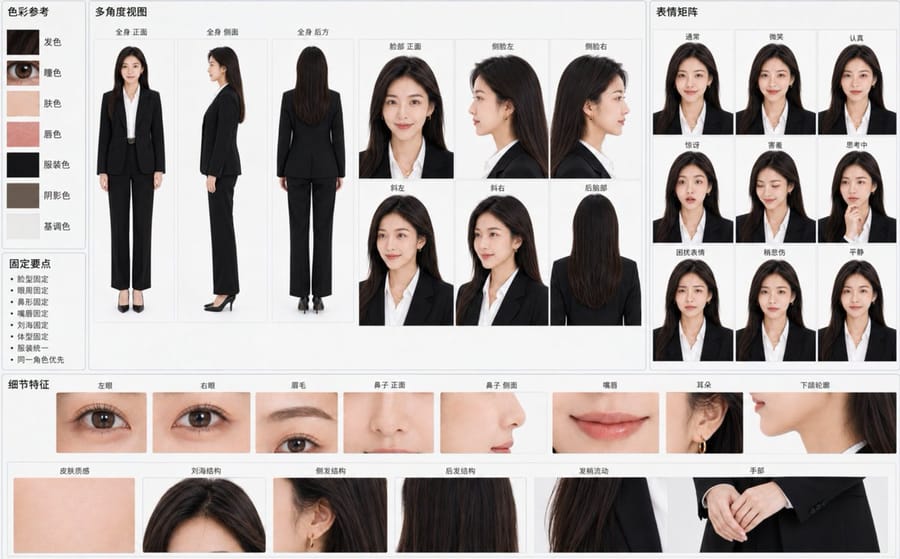
Character Consistency Reference Chart
A technical prompt for creating a visual reference board to lock character identity across multiple angles, expressions, and details.
Prompt
Crie um "{argument name="chart title" default="Character Identity Consistency Reference Chart"}" com base na imagem original do personagem anexada, horizontal {argument name="ratio" default="16:10"}, {argument name="background color" default="light gray-white background"}, layout profissional de quadro de dados visuais. O objetivo principal é fazer com que todos os painéis sejam claramente reconhecíveis como exatamente o mesmo personagem à primeira vista, em vez de vários indivíduos semelhantes.

Trate a identidade do personagem na imagem de referência como uma restrição rígida imutável. Bloqueie estritamente:

- Proporção largura-altura do rosto, maçãs do rosto, bochechas, linha do maxilar e queixo
- Contornos dos olhos, distância entre os olhos, estrutura das pálpebras e temperamento do olhar
- Arco da sobrancelha, espessura, cor e distância entre sobrancelha e olho
- Ponte do nariz, ponta, narinas e formato do nariz no perfil lateral
- Espessura do lábio superior/inferior, pico do lábio, cantos e cor natural dos lábios
- Tom de pele, poros, rubor e textura natural da pele
- Linha do cabelo, repartição, franja, cabelo lateral, comprimento do cabelo traseiro e fluxo das mechas
- Impressão de idade, estrutura óssea, largura dos ombros, comprimento dos membros e tipo físico geral
- Roupas originais, estilo de arte original, textura de luz e atmosfera geral

Use painéis grandes no centro para exibir:

- Corpo inteiro de frente
- Corpo inteiro de lado
- Corpo inteiro de costas
- Rosto de frente
- Perfil esquerdo
- Perfil direito
- Três quartos à esquerda
- Três quartos à direita
- Parte de trás da cabeça

Mantenha perfeitamente consistente a estrutura do crânio, a posição relativa dos traços faciais, o volume do cabelo e as proporções corporais em todos os ângulos. O perfil deve continuar com precisão a ponte do nariz, os lábios, o queixo e a estrutura da testa a partir da frente; é proibido gerar perfis com estilo de personagem diferente.

Configure uma pequena matriz de expressões à direita:

- Normal
- Sorriso
- Sério
- Surpreso
- Tímido
- Pensativo
- Preocupado
- Levemente triste
- Calmo

Mantenha as mesmas pupilas, o tamanho base dos olhos, o formato do nariz, o formato dos lábios e o formato do rosto. Os sorrisos devem ser naturais e contidos, sem alterar a idade ou o temperamento do personagem.

Configure âncoras de identidade refinadas na parte inferior:

- Olho esquerdo / Olho direito / Sobrancelhas
- Nariz (frente/lado) / Lábios / Orelhas
- Contorno da linha do maxilar / Textura da pele
- Franja / cabelo lateral / estrutura do cabelo traseiro / fluxo das pontas do cabelo
- Mãos

Adicione 5-7 amostras de cor precisas à esquerda: cabelo, olhos, pele, lábios, roupas, sombra e cor de tom. Adicione "Fix Points" minimalistas: formato do rosto fixo, área dos olhos fixa, formato do nariz fixo, lábios fixos, franja fixa, tipo físico fixo, roupas unificadas, prioridade para o mesmo personagem.

Fundo limpo, iluminação suave e uniforme, sem iluminação cinematográfica, profundidade de campo acentuada ou elementos decorativos. Personagens realistas mantêm poros naturais, fios finos de cabelo e leves variações no tom de pele; personagens não realistas mantêm estritamente as linhas, blocos de cor, sombras e materiais da imagem original, sem conversão de estilo não autorizada.

Todos os rótulos usam chinês simplificado claro, tamanho de fonte moderado, sem sobreposição de caracteres. Se o espaço for insuficiente, priorize âncoras de identidade e ângulos principais, reduza painéis duplicados e não force um layout completo reduzindo o texto ou sacrificando a consistência do personagem.Como usar este prompt
- 1Copie o prompt exatamente e cole no seu modelo preferido ou projeto Ideart.
- 2Substitua detalhes de produto, sujeito, público e estilo pelo seu próprio contexto.
- 3Gere primeiro um resultado base e depois remixe a direção mais forte em campanha, série de imagens ou conceito de vídeo.
Criar a partir deste prompt
Transforme um prompt de imagem em um projeto criativo finalizado.
Salve o prompt, adicione imagens de referência ou notas e deixe a Ideart moldar o próximo passo de produção no mesmo fio criativo.