
图片AI
Create an ultra-premium flagship 6-panel commercial food
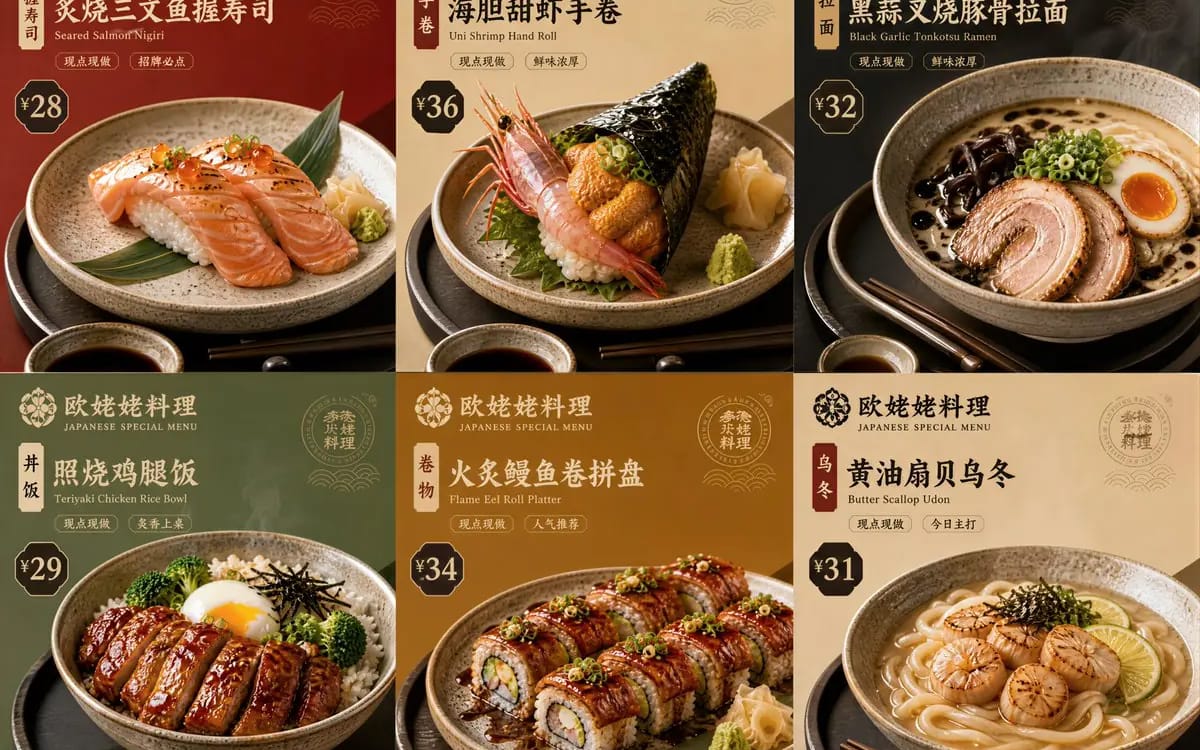
Create an ultra-premium flagship 6-panel commercial food poster for the Japanese-inspired dining brand “欧姥姥料理”, combining a highly standardized menu-system structure with a strong, ownable brand IP identity. The final image must...
提示词
Create an ultra-premium flagship 6-panel commercial food poster for the Japanese-inspired dining brand “欧姥姥料理”, combining a highly standardized menu-system structure with a strong, ownable brand IP identity. The final image must preserve a strict 2x3 grid composition, consistent tableware placement, disciplined typography hierarchy, and absolute product dominance. The result should feel like an official launch poster from a mature restaurant chain: clean, bold, contemporary, luxurious, highly appetizing, and visually systemized.

Core composition:
Use a strict 2x3 six-panel layout. Each panel must contain one hero Japanese-inspired dish placed in the exact same relative position, using the same camera angle, same lighting direction, same plate-or-bowl scale, and the same visual rhythm, so all six panels feel like one unified branded menu family. Use a refined 3/4 top-down food photography perspective. Keep the food large and dominant, while reserving elegant negative space for typography and graphic elements. The page must feel structured, readable, and premium, never crowded.

Brand identity:
This is for the brand “欧姥姥料理”. Build a premium modern Japanese-cuisine visual identity with Chinese-first typography, small English subtitles, refined official logo marks, seal-like corner badges, and subtle hand-brushed graphic accents. The branding must feel highly recognizable and chain-ready, with a consistent visual language across all six panels. Use restrained Japanese-inspired pattern elements, elegant emblem logic, and premium menu-label shapes to make the poster feel like a true flagship brand asset.

Typography content:
Brand title: “欧姥姥料理”
English subtitle: “JAPANESE SPECIAL MENU”
Category labels:
“握寿司”
“手卷”
“拉面”
“丼饭”
“卷物”
“乌冬”
Dish titles:
“炙烧三文鱼握寿司”
“海胆甜虾手卷”
“黑蒜叉烧豚骨拉面”
“照烧鸡腿饭”
“火炙鳗鱼卷拼盘”
“黄油扇贝乌冬”
Optional English subtitles:
“Seared Salmon Nigiri”
“Uni Shrimp Hand Roll”
“Black Garlic Tonkotsu Ramen”
“Teriyaki Chicken Rice Bowl”
“Flame Eel Roll Platter”
“Butter Scallop Udon”
Small Chinese callouts:
“现点现做”
“招牌必点”
“鲜味浓厚”
“炙香上桌”
“人气推荐”
“今日主打”
Unified price badges:
“¥28”
“¥36”
“¥32”
“¥29”
“¥34”
“¥31”
All typography must be artistically arranged, with premium hierarchy, clean alignment, and strong poster rhythm. No crude generic fonts, no ugly bold black text.

Menu-system logic:
The six panels must feel like a mature standardized restaurant menu system rather than six unrelated food shots. Each dish should clearly belong to one of six structured product categories: nigiri, hand roll, ramen, rice bowl, sushi rolls, udon. Reinforce this logic through small category tabs, unified title blocks, consistent price badge design, and repeated panel graphics. The whole poster should communicate a chain-brand menu architecture with strong system discipline.

Port-style IP reconstruction:
Without changing the six-panel grid skeleton, elevate the visual identity into a more memorable flagship brand language. Add subtle recurring brand devices such as stamped corner seals, red-and-ink brush accents, refined geometric or Japanese-inspired mini patterns, elegant label blocks, and coordinated logo placements that repeat across the panels in a restrained but distinctive way. These accents must feel premium, minimal, and highly ownable, turning the poster into a collectible official brand visual rather than a generic menu.

Product lineup:
Create six original Japanese-inspired dishes with strong differentiation and premium appetite appeal:
1. Seared salmon nigiri with lightly flame-kissed glaze and rich salmon marbling
2. Uni and sweet shrimp hand roll with creamy sea urchin, glossy shrimp, crisp nori, and fresh garnish
3. Black garlic tonkotsu ramen with rich broth, black garlic oil, thick chashu pork, ajitama egg, scallion, and mushrooms
4. Teriyaki chicken rice bowl with lacquered roasted chicken, soft egg, Japanese rice, and bright green garnish
5. Flame-seared eel sushi roll platter with glossy tare glaze, soft eel texture, and premium sushi presentation
6. Butter-seared scallop udon with silky broth, golden scallops, thick glossy udon, and elegant herb accents

Food realism:
Render every dish with extreme cooked-food realism and world-class commercial food photography quality. Salmon must show natural marbling, moist flesh glow, delicate oil sheen, and lightly seared edges. Uni must look creamy, rich, soft, and ocean-fresh. Sweet shrimp must feel translucent, glossy, and delicately curved. Chashu pork must show layered fat, juicy fibers, braised gloss, and caramelized edges. Teriyaki chicken must show sticky glaze, roasted skin texture, juicy cut surfaces, and subtle char. Eel must show glossy sauce, soft flaky texture, and rich roasted highlights. Scallops must show golden sear marks, moist centers, and butter reflection. Udon noodles must look thick, elastic, glossy, and luxurious. Rice grains must feel full, sticky, and precise. Broths and sauces must show surface tension, oil droplets, seasoning particles, micro reflections, and subtle steam where appropriate. Add garnish details such as sesame, scallion, shiso, nori texture, wasabi, pickled ginger, citrus accents, and fine spice dust in a controlled, premium way. Everything must be hyper-clean, luxurious, and irresistibly edible.

Plating consistency:
All six dishes must use one coordinated tableware family. Plates, bowls, trays, sauce dishes, and serving bases should feel like the same premium restaurant system, with matching ceramic quality, rim logic, color harmony, and placement discipline. This consistency is essential for the poster’s branded menu-system feel.

Background and color direction:
Use a curated minimalist saturated color system across the six panels, keeping each panel distinct but clearly part of one premium brand palette. Recommended tones:
- vermilion red
- warm ivory
- soft ink black
- muted moss green
- toasted amber
- pale rice beige
The backgrounds must remain clean, flat, elegant, and graphic, with only subtle texture if needed. No clutter, no scenery, no unnecessary props.

Graphic language:
Blend ultra-realistic Japanese food photography with bold official restaurant poster design. Use large Chinese title blocks, small English subtitles, unified category markers, seal-like badges, elegant brush accents, and refined layout repetition. The whole composition must feel collectible, premium, systemized, and unmistakably brand-owned.

Lighting:
Use extremely soft and refined studio lighting with delicate shadows and controlled highlights. The light must flatter fish moisture, sauce gloss, ceramic texture, noodle sheen, broth depth, and nori crispness. Add subtle steam to ramen, udon, and rice bowl panels where appropriate, but keep it elegant and controlled. The final image must feel luminous, polished, and premium.

Mood and quality:
premium, official restaurant branding, standardized menu system, strong Japanese-food IP, highly realistic cooked food, bold Chinese typography, refined poster design, clean six-panel structure, luxurious commercial food campaign, chain-brand launch visual, soft controlled lighting, 8k, world-class image quality

Negative prompt:
messy composition, inconsistent dish placement, inconsistent tableware, cheap flyer design, generic fonts, ugly bold black text, blurry fish, plastic-looking sushi, low-detail noodles, greasy chaos, cluttered backgrounds, cartoon rendering, badly generated text, weak branding, low resolution, random garnish placement, inconsistent lighting, chaotic panel hierarchy
如何使用这个 Prompt
- 1完整复制 Prompt,然后粘贴到你常用的模型或 Ideart 项目中。
- 2把产品、主体、受众和风格细节替换成你的真实上下文。
- 3先生成一个基准版本,再把最强方向 remix 成 Campaign、图片组或视频概念。
从这个 Prompt 开始
把一个图片 Prompt 变成完整创作项目。
保存 Prompt,加入参考图片或笔记,让 Ideart 沿着同一条创作线程推进下一步生产。