
01
Upload one MP4 for transcription
Attach one video or audio file directly from your device. Each task accepts one source, and the shared uploader enforces a 50 MB maximum for that file.
Upload one MP4 or supported audio file up to 50 MB. Convert the spoken content to searchable text, word timing, and reusable transcript or subtitle downloads.
MP4 to transcript converter with timestamps
Use this MP4 to transcript converter when a recording is already saved on your device. Upload one MP4 or supported audio file, transcribe its spoken audio without an existing caption track, and keep the searchable text, timestamps, and subtitle downloads as a protected project artifact.
Attach one video or audio file directly from your device. Each task accepts one source, and the shared uploader enforces a 50 MB maximum for that file.
Speech recognition works from the media audio, so the MP4 does not need embedded subtitles or a separate caption file.
Standard transcription automatically detects the spoken language and returns word-level timing for review, quotes, editing, and subtitle generation.
Reuse the completed artifact as TXT, structured JSON, SubRip SRT, or WebVTT without uploading and transcribing the same file again.
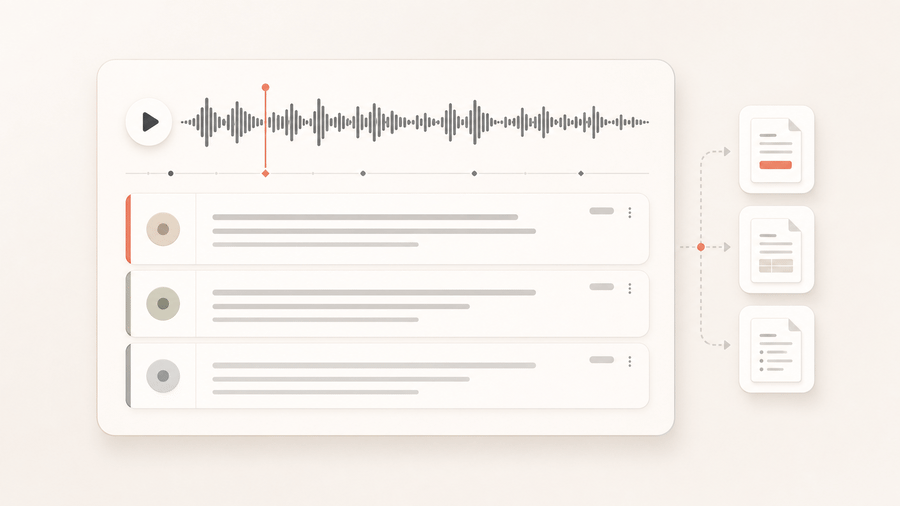
Upload a presentation recording and preserve its spoken explanation as searchable text with timestamps for later review.
Transcribe this MP4 presentation with automatic language detection and word timestamps.
A project transcript plus subtitle files linked to the recording timeline.
Choose speaker-aware mode for a locally recorded interview, panel, or conversation that needs labeled turns.
Transcribe this uploaded interview with speaker labels and word timestamps.
Speaker-aware segments for editorial review, quotations, and show notes.
Credits are settled from actual transcript duration. Choose standard transcription for timed text or speaker-aware transcription when dialogue needs attribution.
Includes automatic language detection and word-level timestamps. This mode does not add speaker labels.
Adds speaker labels and audio-event tags. Enabling keyterm guidance costs 540 credits per hour.
The completed result records the selected mode, actual duration, and exports. TXT, JSON, SRT, and VTT downloads do not start another transcription job.
See how one public link or uploaded file becomes structured text with timing data and reusable download formats.
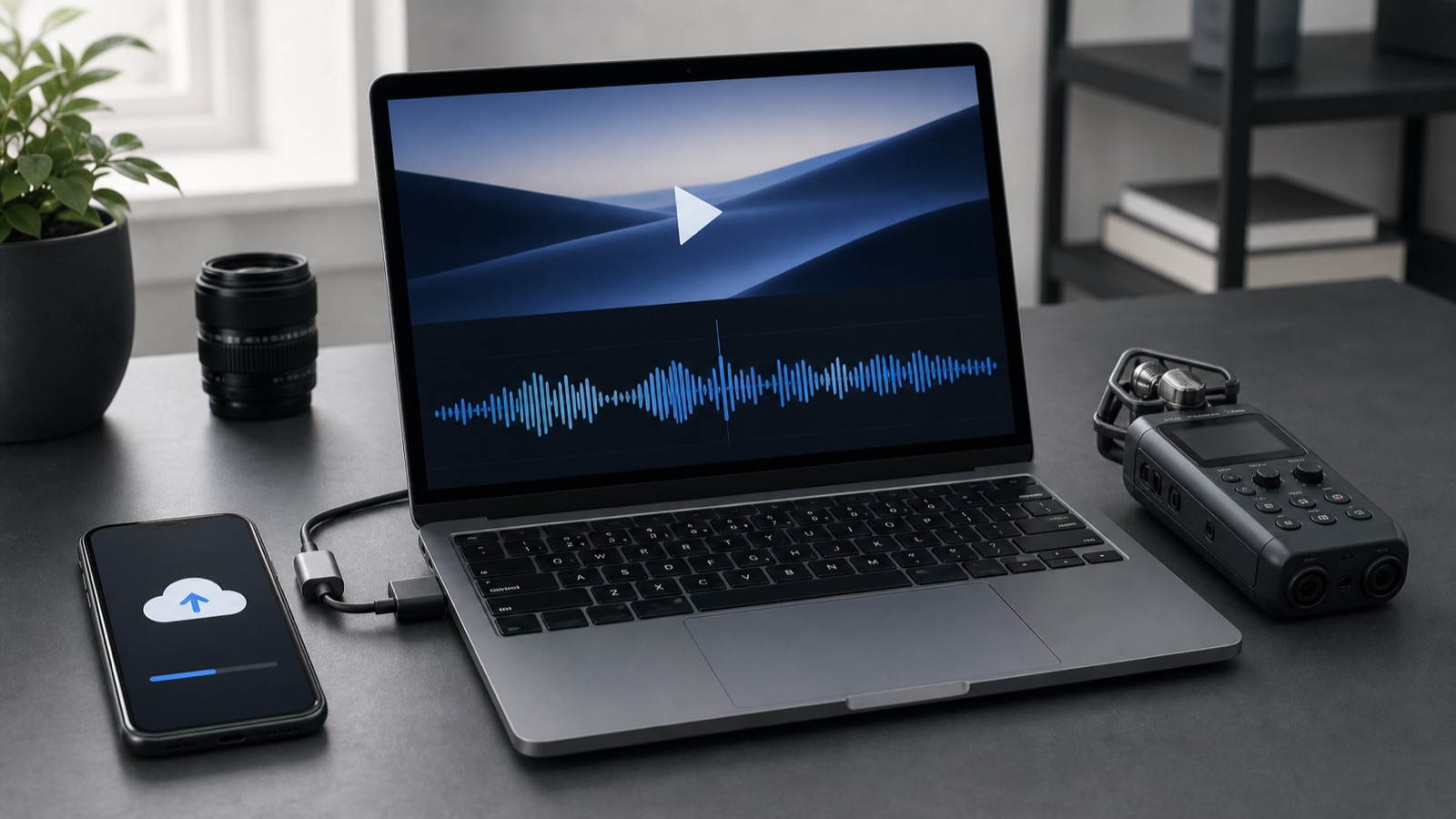
Paste a public video URL or upload one audio or video file. The sandbox downloads and normalizes the source before transcription.
Speech is normalized into searchable text, timed words, and readable segments. Speaker-aware mode can also retain speaker labels and audio events.
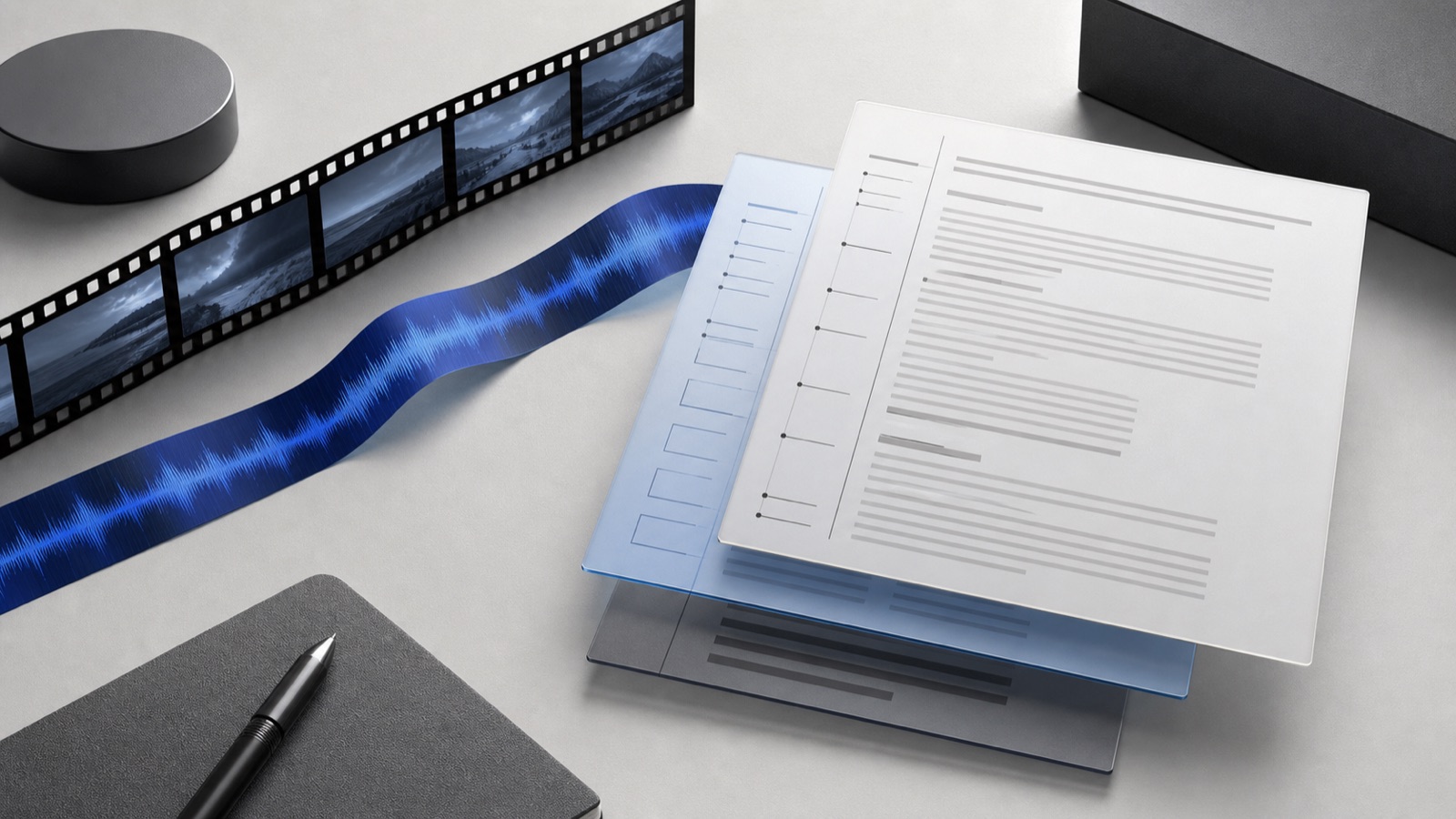
Reuse the completed result as plain text, structured JSON, SRT captions, or WebVTT without another transcription job.
Turn an exported edit or camera file into a searchable script before selecting quotes, captions, and chapters.
Preserve timestamped evidence from an uploaded recording before producing summaries or extracting decisions.
Create notes and subtitle files from recorded lessons for review, accessibility, and localization handoff.
Choose one MP4 or supported audio file from your device. Split or compress a larger source before uploading it.
Choose standard transcription at 10 credits per minute for word-timed text, or speaker-aware mode when genuine speaker labels or audio-event tags are needed.
Open the completed transcript in the project and download TXT, JSON, SRT, or VTT for editing, notes, or subtitles.
Paste a supported public video URL or upload one media file. This video to text converter creates searchable transcript text, word timing, optional speaker labels, and subtitle-ready files.
Paste a public YouTube video, Short, or live replay link. Generate a YouTube video transcript with word timing, searchable text, and reusable subtitle files.
Paste a public Instagram Reel or video-post URL with accessible spoken audio. Generate a Reel transcript with timestamps and subtitle files without uploading the media again.
Paste one public TikTok video link. Transcribe the spoken audio into searchable text, preserve useful timing, and export captions without uploading the clip.
Attach one MP4 or supported audio file, choose the transcript mode, and start the project task. The result includes searchable text and can include word timestamps, subtitles, or speaker labels.
Each transcription task accepts one uploaded video or audio file up to 50 MB. A larger recording must be compressed or split before upload.
Yes. The workflow transcribes the spoken audio and does not require the file to contain an embedded subtitle or caption track.
Yes. Every completed transcript can export SRT and VTT as well as TXT and JSON. Speaker-aware transcription costs 440 credits per hour, or 540 credits per hour with keyterm guidance; standard transcription costs 10 credits per minute.
Attach one file and keep its transcript, timestamps, and subtitle downloads together in the same project.